
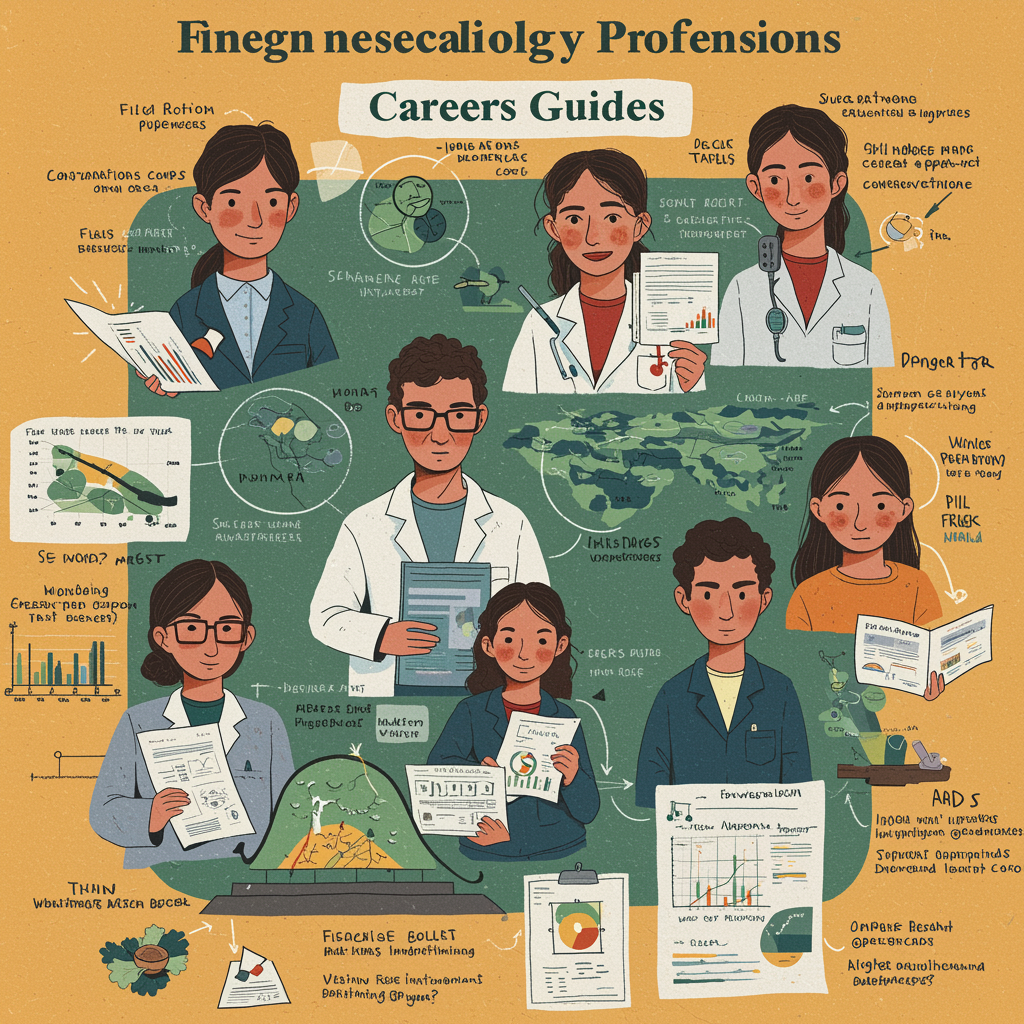
When we talk about the future of our planet, the conversation inevitably turns to Ecology careers. As global environmental challenges become more complex, the demand for dedicated professionals who understand the intricate web of life has never been higher. Welcome to The Green Horizon, the official blog of Eco-Systemic. In this comprehensive guide, we are diving deep into the professional landscape of environmental science. Whether you are a university student mapping out your academic future, a seasoned professional considering a green career pivot, or simply an enthusiast curious about who protects our natural world behind the scenes, this article will illuminate the diverse, challenging, and profoundly rewarding paths available in the ecological sector.
The Rising Demand for Green Professionals
For decades, working in nature was often viewed through a narrow lens—perhaps working as a park ranger or a university researcher. Today, the reality is vastly different. The modern environmental sector is a dynamic, rapidly expanding industry intersecting with urban planning, corporate sustainability, government policy, and cutting-edge technology.
Several global trends are driving this unprecedented growth. First, climate change mitigation and adaptation have become central to international policy. Governments and private corporations alike are recognizing that nature-based solutions—such as restoring wetlands to absorb floodwaters or planting urban forests to reduce heat—are often the most effective and economically viable strategies.
Second, new legislative frameworks, such as Biodiversity Net Gain (BNG) mandates and nutrient neutrality regulations, are forcing developers to not just minimize environmental harm, but actively improve local ecosystems. This has created a massive surge in demand for ecological consultants who can measure, map, and manage these enhancements.
“Ecology is no longer just a descriptive science of what is out there; it is a prescriptive science of how we must live to ensure the planet thrives.” — The Green Horizon Editorial Team
Core Pathways in the Ecological Sector
The beauty of this field lies in its staggering variety. Depending on your interests, you could spend your days knee-deep in a marsh, analyzing satellite data in a high-tech lab, or advising executives in a corporate boardroom. Let’s explore some of the most prominent career tracks.
1. The Ecological Consultant
If there is one role that has seen an absolute explosion in demand, it is the ecological consultant. These professionals sit at the critical intersection of human development and natural preservation. Before a new highway, housing development, or wind farm can be built, consultants are brought in to survey the land.
Their primary job is to identify protected species—from bats and great crested newts to rare orchids—and assess the potential impact of the proposed project. They then design mitigation strategies to ensure the development complies with strict environmental laws. This role requires a robust mix of rigorous field skills (often involving early mornings or late nights for wildlife surveys) and the ability to write clear, legally binding technical reports.
2. The Restoration Ecologist
While consultants often work to prevent future damage, restoration ecologists focus on healing the scars of the past. These specialists take degraded ecosystems—such as abandoned mining sites, heavily polluted rivers, or deforested landscapes—and engineer their recovery.
This is a highly interdisciplinary role. A restoration ecologist must understand soil chemistry, hydrology, native botany, and animal behavior. They might spend years carefully reintroducing native flora to a coastline to prevent erosion or reshaping a riverbed to encourage the return of spawning salmon. It is perhaps one of the most hands-on and visibly rewarding jobs in the science world, as you get to watch a barren landscape slowly return to life.
3. The Marine and Aquatic Biologist
Building on our previous explorations of aquatic systems, careers in marine and freshwater biology remain highly sought after. These scientists study everything from the microscopic phytoplankton that produce half the world’s oxygen to the massive migratory patterns of whales.
Aquatic ecologists might work for government agencies monitoring the health of commercial fisheries, ensuring that harvest quotas are sustainable. Others work for non-profits focusing on coral reef restoration or monitoring the impact of agricultural runoff on local lakes and rivers. Given that over 70% of the Earth is covered in water, the geographic opportunities for this career path are genuinely boundless.
4. The Conservation Scientist and Park Naturalist
For those who possess both a deep love of nature and a passion for public education, these roles are ideal. Conservation scientists generally work for government land management agencies (like national parks or forestry commissions). They manage natural resources, balancing the need for timber or recreational access with the absolute necessity of preserving habitat integrity.
Park naturalists, on the other hand, are the public face of ecology. They translate complex scientific concepts into engaging stories for the public. By leading guided hikes, designing visitor center exhibits, and running educational workshops, they foster a sense of environmental stewardship in the next generation.
5. The Spatial Analyst (GIS and Remote Sensing)
Not all environmental jobs require muddy boots. The rise of Geographic Information Systems (GIS) and drone technology has created a massive niche for tech-savvy ecologists. Spatial analysts use satellite imagery, LiDAR, and drone footage to map habitats on a massive scale.
They can track deforestation in the Amazon in real-time, model how rising sea levels will impact coastal wetlands, or map the exact distribution of a highly localized invasive species. For students who love computers and data as much as they love forests, this is one of the highest-paying and fastest-growing niches in the industry.
Comparing Your Options
To help you visualize where you might fit in, we have compiled a quick reference table of these key roles:
| Career Title | Primary Focus | Typical Work Environment | Core Skills Required |
| Ecological Consultant | Development impact, wildlife surveys, legal compliance | 50% Field / 50% Office | Species ID, reporting, legislation knowledge |
| Restoration Ecologist | Rebuilding damaged and polluted ecosystems | Field sites, laboratories, project offices | Soil science, botany, hydrology, engineering basics |
| Marine Biologist | Studying saltwater ecosystems and marine life | Coastal field stations, boats, aquatic labs | Scuba certification, statistical analysis, oceanography |
| Park Naturalist | Public education and localized conservation | National and state parks, visitor centers | Public speaking, broad biological knowledge, teaching |
| Spatial Analyst (GIS) | Mapping and modeling environmental data | Office-based, computer labs, occasional drone piloting | Software proficiency (ArcGIS, QGIS), data analysis |
Essential Skills for the Modern Ecologist
If you are a student looking to build a resume, or a professional looking to transition, knowing what employers want is half the battle. The modern environmental job market is highly competitive and favors candidates who possess a “T-shaped” skill set: a broad understanding of general biology, combined with deep, specialized expertise in one or two specific areas.
In-Demand Hard Skills:
- Botanical Identification: Being able to identify plants, particularly grasses and mosses, is a surprisingly rare and highly valued skill. Botany is the foundation of habitat assessment.
- Protected Species Licensing: Holding specific licenses to handle or survey protected animals (like certain bats or amphibians) makes a candidate instantly employable.
- Statistical Analysis: Nature is chaotic. Making sense of it requires strong data skills. Proficiency in coding languages like R or Python for biological statistics is a massive advantage.
- Drone Piloting and GIS: As mentioned, the ability to map a landscape digitally is becoming a standard expectation rather than a luxury.
Crucial Soft Skills:
- Technical Writing: You can be the best field scientist in the world, but if you cannot write a clear, legally compliant, and easily understandable report, your data is useless.
- Project Management: Senior roles heavily involve managing budgets, coordinating large teams of field workers, and communicating with corporate clients who may not understand the science.
- Adaptability: Weather changes, equipment fails, and animals do not follow schedules. Resilience and the ability to pivot under pressure are essential traits for fieldwork.
The Financial and Personal Realities
It is important to have an honest conversation about compensation. Historically, jobs in conservation and ecology were known more for their passion than their paychecks. However, this is rapidly changing. While entry-level field technician roles can still be modest in pay—often serving as stepping stones to gain essential field hours—mid-level and senior roles now command highly competitive salaries.
Roles in the private sector, such as environmental consulting for large engineering firms, natural science managers, and corporate sustainability directors, are particularly lucrative. Furthermore, as the scarcity of highly skilled taxonomists and licensed specialists increases, employers are being forced to raise salaries to attract and retain top talent.
But beyond the financial aspect, the true currency of an ecological career is impact. Very few professions offer the tangible satisfaction of knowing that your daily labor directly contributes to the survival of a species, the cleanliness of a river, or the resilience of a community against climate change.
“Choose a job you love, and you will never have to work a day in your life. In ecology, you choose a job the Earth needs, and your work will outlast your lifetime.”
How to Begin Your Journey
If you are inspired to step into this world, the path forward requires strategic planning.
For Students: Focus on your foundation. A Bachelor of Science in Ecology, Biology, Environmental Science, or a closely related field is usually the minimum requirement. However, degrees alone are rarely enough. Use your university years to gain practical experience. Volunteer for local conservation groups, assist professors with their summer research, and take field courses whenever possible. Employers value hands-on experience just as much, if not more, than academic grades.
For Career Changers: Look for transferable skills. If you have a background in project management, data science, law, or communications, the environmental sector desperately needs your expertise. You may not need to go back for a four-year science degree; a specialized master’s program or a series of targeted professional certificates (like GIS or environmental policy) can bridge the gap.
For Everyone: Get outside. The best ecologists are those who are intimately familiar with their local environments. Learn the names of the trees in your neighborhood. Understand the watershed that supplies your drinking water. Notice the migratory birds that pass through in the spring. A deep, personal connection to the natural world is the ultimate fuel for a long and successful career in this field.
Final Thoughts from Eco-Systemic
Navigating the job market can be daunting, but choosing to dedicate your professional life to the environment is one of the most noble and necessary decisions you can make. The challenges facing our planet are vast, but as we have seen, the army of professionals working to solve them is growing stronger, smarter, and more diverse every single day.
We hope this deep dive into the professional world of environmental science has been both informative and inspiring. Keep exploring, keep learning, and remember that every significant change begins with the curiosity to understand how our incredible ecosystem functions. Stay tuned to The Green Horizon for more insights, interviews with industry professionals, and deep dives into the science that sustains us.